TRANSIT RIDERSHIP
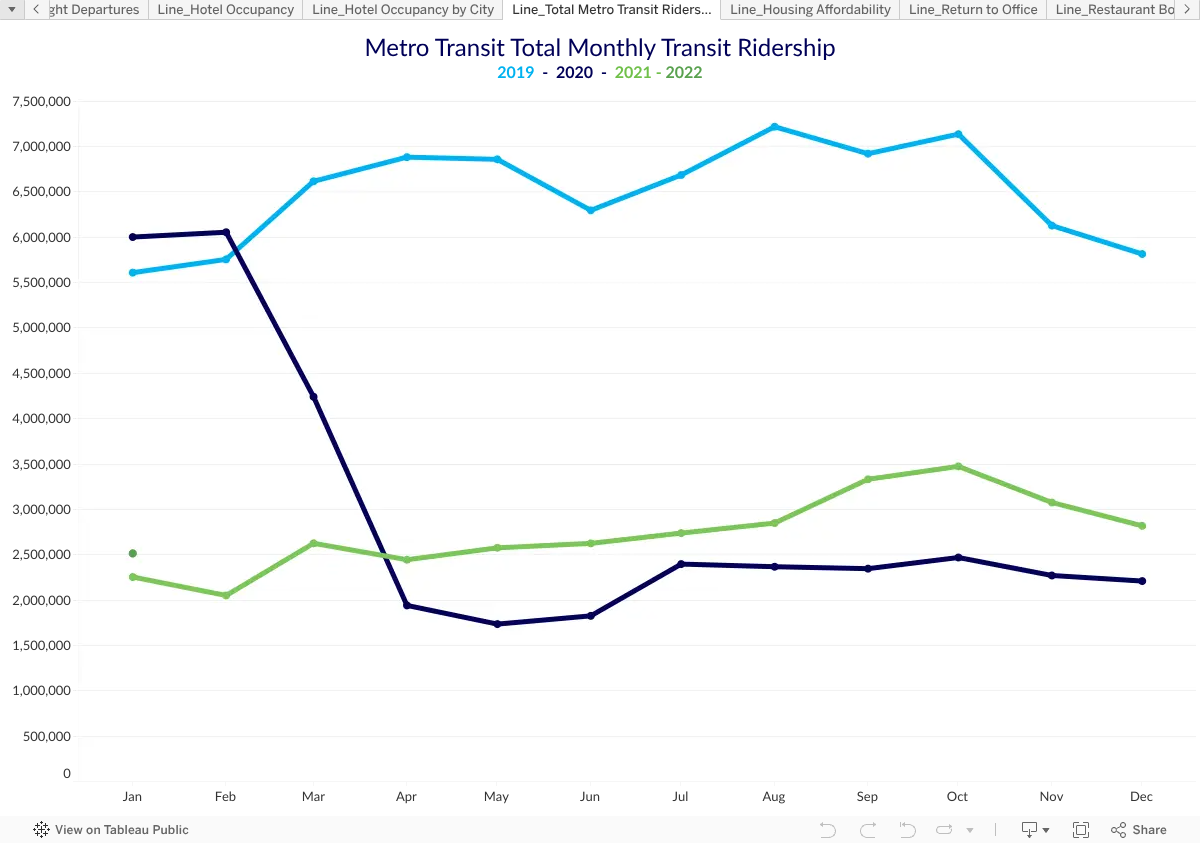
Metro Transit ridership has continued to recover ridership from the lows it experienced when the pandemic begun. January ridership was over 2.5 million, a decrease of 10.7% from December’s total.
|
WHAT THE DATA IS TELLING US 2,514,265 total rides were taken on Metro Transit routes in the month of January 2022. Total monthly systemwide ridership was 55% below January 2019 (pre-COVID-19) levels, but rose 12% above ridership in January of 2022, but 10.7% below ridership in the previous month of December 2021. The decline in ridership month-over-month is due to seasonal factors as well as potential impacts from the omicron variant. In April of 2020, when strict stay-at-home orders forced many workers to work-from-home, monthly systemwide ridership dropped to 1,941,149 rides, 72% below prior year levels. Preliminary ridership remained more than 70% lower than prior year levels throughout the spring of 2020, and has since fluctuated between 60% and 67% below pre-COVID-19 levels each month. Declines in previously high-service locations such as downtowns have been largely due to the transition to remote work for workers who used to commute via public transit. Metro Transit continues to provide more than 80,000 essential trips per day. Note: All 2021 ridership data are preliminary estimates and are subject to change. This data reflects ridership on service provided by Metro Transit, including services provided to Maple Grove Transit under contract. |
POWERED IN
|

 |
 |
This metric tracks the percent change in weekday ridership on metro transit lines from the average weekday ridership during the last week of February 2020.
WHY THIS MATTERS TO ECONOMIC RECOVERY:
Commuting and transit were severely impacted by the COVID19 pandemic, as many people began to work from home, or faced reduction in hours or job cuts as a result of state stay-at-home orders and abrupt economic effects of the COVID19 pandemic. Metro Transit is a major economic engine and employer in the region and is a critical component for our regional economic competitiveness. Many of our region’s businesses rely on convenient and dependable public transit to transport employees to and from work. Trends in ridership are a strong indicator of the level at which the public transit industry is recovering from the economic effects of the pandemic.
TELLING THE FULL STORY:
The declines in ridership are not spread evenly across the system. The largest ridership declines have been seen on regular bus and on express bus routes, specifically which largely serve commuters who now have the option to work remotely. Though the pandemic has changed many aspects of life for residents of the MSP region, public transit continues to play an essential role in the lives of many riders who rely on transit to reach essential jobs, get groceries and medicine, and meet other needs.

Source: Metro Transit
Employers who can offer remote work options may continue to offer these options beyond the life of the pandemic, creating long-term changes in transportation demand. Even so, the region is growing and will need safe, reliable transportation options, including transit, to continue recovering from the pandemic and to thrive in the decades that follow.
HOW TO LEARN MORE:
For the latest information on Metro Transit’s response to the COVID-19 pandemic visit metrotransit.org/ready.
Want to share insights from the Regional Recovery Hub in your own presentations and materials? Download the Recovery Toolkit.